
Why Chengal Is Considered for Outdoor Timber Applications
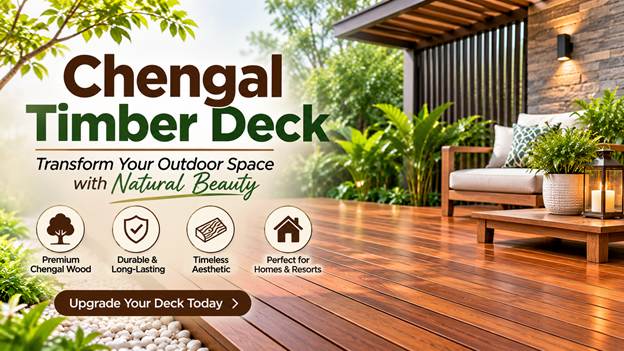
A Chengal timber deck is considered for outdoor applications because Chengal is a dense tropical hardwood with natural characteristics suited to exterior environments. Its grain, physical strength and established use as an outdoor timber make it relevant for patios, terraces, garden decks and other exposed spaces in Malaysia.
However, Chengal should not be viewed as a material that performs independently of the decking system around it. Rainfall, humidity, sunlight, drainage, ventilation, fasteners and maintenance all influence how the timber behaves outdoors.
The most practical way to assess Chengal is therefore to look at both the properties of the wood and the conditions of the intended application.
Chengal Is a Tropical Hardwood Used in Exterior Applications
Chengal is a Malaysian tropical hardwood associated with exterior timber use.
Its natural density and hardwood structure make it suitable for consideration in environments where timber is exposed to outdoor conditions.
This does not mean every Chengal board or project performs identically.
Species characteristics provide the foundation, but product quality, installation and site conditions determine how the material functions in a real decking application.
Hardwood Properties Matter Outdoors
Hardwood refers broadly to timber from flowering trees, but individual hardwood species vary significantly in density, grain, durability and moisture behaviour.
Chengal is valued because its physical properties differ from many lighter timber options.
For outdoor decking, these characteristics can influence how boards respond to use, fastening and environmental exposure.
The term hardwood alone should therefore not be used as a guarantee of performance.
Chengal Density Is One Relevant Characteristic
Density affects the weight, hardness and handling characteristics of timber.
Chengal is recognised as a dense hardwood, which contributes to its suitability for demanding timber applications.
In decking, density can influence cutting, drilling, fastening and support requirements.
It should still be considered together with natural durability, board dimensions and installation conditions.
Density Does Not Replace Good Deck Design
A dense timber can still perform poorly when installed over inadequate drainage or with unsuitable board spacing.
Water movement, ventilation and substructure design remain essential.
This is especially relevant in Malaysia, where rainfall and humidity are regular environmental factors.
The natural properties of Chengal should therefore be supported by appropriate installation rather than relied upon in isolation.
Chengal Has Natural Durability Characteristics
Natural durability describes the inherent ability of a timber species to resist deterioration under particular conditions.
Chengal is associated with outdoor use partly because of its natural durability characteristics.
These properties can make it suitable for exterior applications when compared with timber that is less adapted to outdoor exposure.
Natural durability should not, however, be interpreted as resistance to every form of moisture or neglect.
Outdoor Exposure Still Needs to Be Managed
Even naturally durable timber benefits from conditions that allow it to drain and dry.
Persistent standing water, blocked gaps or prolonged debris accumulation can create undesirable moisture conditions.
Chengal performs as part of a system, not as an isolated board.
The decking design should therefore help minimise avoidable moisture retention.
Chengal Grain Gives It a Natural Outdoor Appearance
Chengal has visible natural grain and tonal variation that contribute to its character.
This can make it suitable for outdoor spaces where homeowners want timber to complement plants, stone, concrete or other natural materials.
Unlike manufactured decking, the surface is not intended to look perfectly uniform.
Board-to-board variation is part of the appearance of real hardwood.
Natural Variation Should Be Expected
Individual Chengal boards can vary in colour, grain direction and surface character.
This means a completed deck will not look exactly like one small timber sample.
The overall visual effect becomes more apparent across a larger surface.
Homeowners should therefore evaluate Chengal as a natural material rather than expecting manufactured consistency.
Chengal Can Suit Garden Decking Applications
Garden decking often benefits from materials that integrate visually with landscaping.
Chengal can create a natural timber surface alongside planting, stone and garden features.
From a practical perspective, garden applications also expose the deck to soil moisture, irrigation and organic debris.
The timber should therefore be supported by suitable ground clearance, drainage and ventilation.
Garden Conditions Can Increase Moisture Exposure
Leaves, flowers and soil can collect between decking boards and around the substructure.
When wet, this material may retain moisture.
Dense vegetation can also reduce airflow.
Routine cleaning and landscape management remain important even when Chengal is selected for the deck.
Chengal Can Be Considered for Patios
Patios commonly function as outdoor living areas connected directly to the home.
Chengal can provide a natural hardwood surface for seating, dining and circulation.
The level of weather exposure should still be assessed.
A sheltered patio may receive limited direct rain, while an open patio can be exposed to both strong sunlight and frequent rainfall.
Patio Use Should Influence Deck Planning
Furniture and daily circulation affect how a patio deck functions.
Board layout should provide a practical surface around tables, chairs and other outdoor items.
Drainage access should not be blocked by the installation.
The deck should therefore be designed around the actual use of the space rather than timber selection alone.
Chengal May Also Be Used for Balcony Decking
Balconies can accommodate timber decking where the existing conditions are suitable.
Chengal can be considered when natural hardwood is preferred.
However, balcony installations often have strict height, drainage and threshold limitations.
The complete decking system should be assessed before board dimensions or fixing methods are finalised.
Balcony Drainage Requires Particular Attention
Balconies often rely on fixed floor drains beneath the decking.
Rainwater passing through board gaps needs to continue moving towards those outlets.
The substructure should not obstruct this path.
Access to important drains should also remain possible for cleaning and maintenance.
Chengal Can Be Used on Exposed Terraces
Open terraces may subject timber to substantial sunlight, rainfall and temperature variation.
Chengal’s natural hardwood characteristics can make it relevant for these spaces.
The timber will still weather over time.
Homeowners should therefore consider whether they prefer a naturally aged surface or intend to manage the colour through maintenance.
Outdoor Timber Must Cope with Repeated Rainfall
Rainfall is one of the main environmental factors affecting timber decking in Malaysia.
A Chengal deck will regularly become wet in exposed locations.
This is expected.
The important requirement is that water can leave the surface and underlying structure efficiently.
Board Gaps Help Water Pass Through
Spacing between Chengal boards provides a path for rainwater to pass through the deck surface.
These gaps also provide room for normal timber movement.
Spacing should be determined according to board dimensions, moisture condition and the chosen decking system.
It should not be set purely for visual effect.
Drainage Beneath the Boards Is Equally Important
Water passing through the deck still needs a clear route away.
Existing floor slopes, drainage outlets or ground conditions influence this process.
A well-spaced surface can still experience problems if the area underneath traps water.
Drainage should therefore be planned at both surface and substructure levels.
Humidity Influences Chengal Moisture Content
Like all natural wood, Chengal is hygroscopic.
This means it absorbs and releases moisture depending on environmental conditions.
Malaysia’s high humidity can influence how quickly timber dries after rain.
Decking should therefore have adequate airflow to support moisture movement.
Timber Movement Is a Normal Response to Moisture
Changes in moisture content can cause timber boards to expand or contract.
The extent of movement depends on species, dimensions and environmental exposure.
Proper installation allows for this behaviour.
Boards should not be fixed so tightly that normal movement becomes unnecessarily restricted.
Ventilation Supports Drying Around the Timber
Ventilation allows air to circulate beneath and around Chengal decking.
This helps moisture dissipate after rain or cleaning.
Raised garden decks may have more natural airflow than low-profile balcony systems.
The deck design should respond to the amount of available ventilation.
Low Decks Need More Careful Airflow Planning
Decks installed close to concrete or tile surfaces have limited space beneath the boards.
This can slow air circulation.
Where installation height is restricted, drainage and airflow should be considered together.
The substructure should avoid creating unnecessary pockets where moisture can remain.
Sunlight Affects Chengal Surface Colour
UV exposure gradually changes the appearance of natural timber.
Chengal should not be expected to retain exactly the same colour throughout its outdoor life.
Open decks can experience stronger and faster colour change than sheltered ones.
This surface weathering is part of the natural ageing of timber.
Weathering Can Produce Lighter or Greyer Tones
Prolonged exposure to sunlight and weather can alter the original timber colour.
Chengal may become lighter or greyer depending on exposure and maintenance.
This does not automatically indicate that the material has failed.
Colour change should be assessed separately from structural or installation-related issues.
Surface Appearance Depends on Exposure
A Chengal deck can weather unevenly when some areas are shaded.
Furniture, roof overhangs and planters can reduce UV exposure in localised sections.
As a result, covered boards may retain a different tone from surrounding timber.
This variation is common in natural outdoor wood.
Installation Matters as Much as Timber Selection
Selecting Chengal is only the first stage of a decking project.
The supporting framework, board spacing, fastening and drainage all influence performance.
Poor installation can undermine the benefits of suitable timber.
A Chengal deck should therefore be evaluated as a complete construction system.
The Substructure Supports the Deck Surface
The substructure is the framework beneath the Chengal boards.
Its spacing should correspond with board dimensions and expected use.
The structure should provide stable support without unnecessarily obstructing drainage.
Accurate alignment also helps create a consistent finished surface.
Fasteners Need to Suit Dense Hardwood
Dense hardwood can require appropriate drilling and fastening methods.
The chosen fasteners should be compatible with the timber, board profile and exterior environment.
Visible screws and concealed systems may both be considered depending on the decking product.
The fastening method should provide secure attachment without ignoring timber movement.
Concealed Fixing Can Reduce Visible Hardware
Concealed fastening systems can create a cleaner timber surface by reducing the number of visible fixing points.
This may appeal where the natural grain is intended to remain visually prominent.
The system still needs to maintain appropriate spacing and structural attachment.
Appearance should therefore not override technical compatibility.
Installation Height Can Affect Chengal Applications
The total deck height includes both the timber boards and the supporting framework.
This becomes important on balconies, terraces and patios near doors.
Available clearance should be confirmed before installation.
A preferred timber board should not be selected without checking whether the complete system fits the site.
Chengal Can Be Considered for Residential Outdoor Spaces
Residential applications often include garden decks, patios, balconies and outdoor seating zones.
Chengal can support these uses where the timber and installation suit the environment.
Homeowners may place particular emphasis on natural grain and appearance.
Maintenance expectations should still be discussed before the deck is installed.
Chengal Can Also Be Considered for Commercial Applications
Commercial spaces may use timber decking for terraces, courtyards or outdoor circulation areas.
The suitability of Chengal depends on the specific level of foot traffic and use.
Commercial applications should also consider operational cleaning, furniture movement and maintenance access.
The same species may therefore require a different decking specification from a residential installation.
Traffic Level Should Influence the Overall Specification
The timber species alone does not determine whether a deck suits a particular level of use.
Board dimensions, support spacing and fastening also matter.
High-use areas may require different system planning from private residential decks.
Chengal should therefore be selected in conjunction with the intended traffic conditions.
Maintenance Remains Necessary for Chengal
Chengal should not be described as maintenance-free.
Outdoor decking accumulates dust, leaves and organic debris regardless of timber species.
Routine cleaning helps keep gaps and drainage areas clear.
Inspection also helps homeowners identify unusual movement or persistent moisture conditions.
Cleaning Helps Maintain Drainage
Leaves and dirt can block spaces between timber boards.
This can slow surface water movement and trap moisture.
Regular cleaning keeps the drainage function of the gaps more effective.
Garden decks may require more frequent attention because of nearby vegetation.
Inspection Helps Monitor the Deck System
Inspection should include more than surface colour.
Homeowners can observe board condition, fasteners, drainage and areas that remain damp longer than expected.
Weathering should be distinguished from physical changes.
A timber deck can change colour naturally while continuing to function properly.
Surface Care Can Manage Appearance
Surface care may be used where homeowners want to retain a colour closer to newly installed Chengal.
The appropriate treatment depends on the condition of the timber and any previous finish.
Some owners may instead prefer to allow natural greying.
Both approaches still require basic cleaning and moisture management.
Chengal Should Not Be Chosen Only for Durability
Durability is an important characteristic, but it is not the only reason Chengal is considered for outdoor applications.
Its natural grain, colour variation, density and Malaysian hardwood identity also influence selection.
A deck is both a functional surface and a visible part of the outdoor environment.
The best material choice therefore balances performance and appearance.
Chengal Should Also Not Be Chosen Only for Appearance
Natural grain can make Chengal visually appealing, but appearance alone is not enough.
The site may have drainage, height, traffic or maintenance requirements that influence whether a particular decking configuration is suitable.
Aesthetic preference should therefore be assessed alongside practical conditions.
This helps avoid selecting a timber without considering the complete outdoor application.
Chengal and Other Hardwoods Have Different Characteristics
Chengal, Merbau, Balau and Teak are not interchangeable materials.
Each species has its own colour, grain, density and outdoor behaviour.
A project may suit more than one hardwood.
The best option depends on which material characteristics align with the intended environment and design.
Project Requirements Should Guide Chengal Selection
Chengal is most appropriate when its natural characteristics match the needs of the project.
Several factors should be reviewed before deciding.
- Outdoor exposure to rain and sunlight
- Desired natural timber appearance
- Drainage and ventilation conditions
- Deck location and available height
- Expected foot traffic
- Maintenance expectations
This project-based evaluation is more useful than selecting Chengal solely because it is a recognised hardwood.
Responsible Sourcing Is Relevant for Natural Hardwood
Timber sourcing should be considered when specifying natural hardwood.
Project owners can look for legally and responsibly sourced material where appropriate documentation is available.
Species identity and sourcing are separate issues.
The name Chengal does not by itself confirm how a particular timber product was harvested or supplied.
Frequently Asked Questions (FAQs)
Why is Chengal considered for outdoor decking?
Chengal is a dense Malaysian tropical hardwood with natural characteristics associated with exterior timber use. Its suitability still depends on proper installation, drainage, ventilation and maintenance.
Can Chengal be used for garden decking?
Yes, Chengal can be considered for garden decking where the complete system manages ground moisture, drainage, ventilation and organic debris appropriately.
Can Chengal be used on balconies?
Chengal may be used for suitable balcony decking projects when available height, drainage, thresholds and supporting requirements are addressed. Existing floor drains should remain functional.
Does Chengal timber weather outdoors?
Yes. Chengal is natural wood and can change colour when exposed to sunlight, rain and humidity. Weathering may produce lighter or greyer surface tones over time.
Does Chengal require maintenance?
Yes. Routine cleaning, drainage checks and inspection remain important. Surface care may also be used depending on the desired appearance of the timber.
Chengal Works Best When Material and Environment Match
Chengal is considered for outdoor timber applications because it combines dense hardwood characteristics with natural grain, visual variation and a history of exterior use in Malaysia. These qualities can make it relevant for patios, gardens, balconies, terraces and other outdoor settings.
Its performance should never be attributed to the species alone. Drainage, ventilation, board spacing, fastening, substructure design and maintenance determine how well the complete deck manages tropical weather.
A Chengal timber deck is therefore most effective when the material is selected for the right application and supported by an installation designed around the conditions of the site.
Consider Chengal for Your Outdoor Application
Different outdoor spaces place different demands on natural timber. Property owners evaluating a Chengal timber deck can get in touch with Innodeckscape to discuss Chengal timber decking characteristics and application considerations for their project.